Lodestone.
An open-source Rust desktop app for identifying and managing Minecraft mods through community-driven classification.
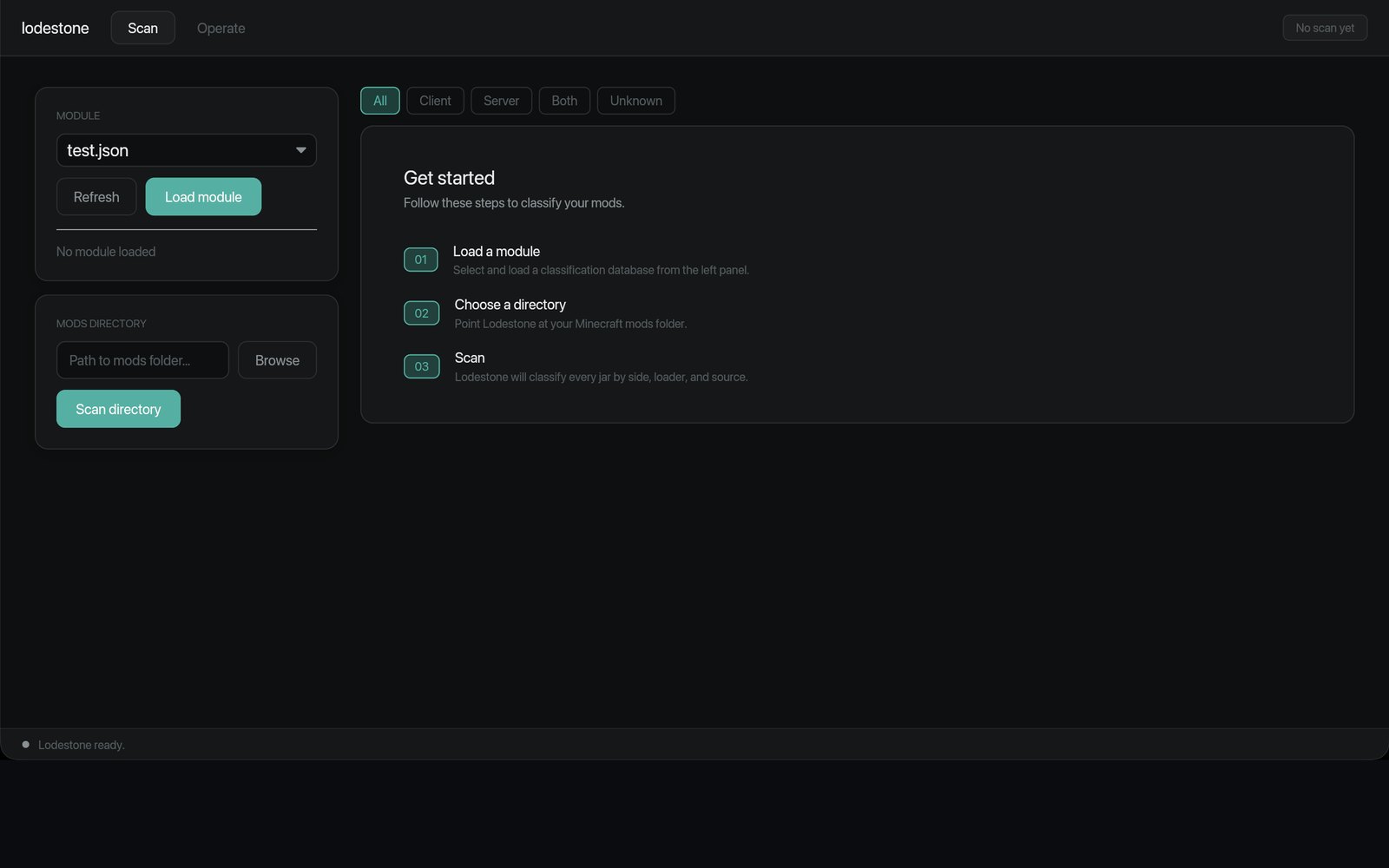
Project summary
Lodestone helps Minecraft players and server administrators understand what is inside a modpack. It focuses on identifying mods and organizing them by whether they belong on the client, server or both.
Problem being solved
Large modpacks are difficult to audit manually. A single wrong-side mod can break a server or confuse players, and the available information is often scattered across download pages, community notes and file names.
Target users
The users are Minecraft server administrators, modpack maintainers and players who need a cleaner way to inspect and manage mod collections.
Architecture overview
The app is written in Rust as a desktop tool. The core model is a local workflow around scanning mod files, presenting useful classification data and helping users keep packs organized without relying on a web service.
Important technical decisions
Rust was a good fit because file-heavy tooling benefits from performance, strong typing and predictable packaging. Keeping the project open source also makes community classification possible.
Difficult problems and solutions
The hard part is that mod metadata is messy. Lodestone treats classification as a practical workflow rather than pretending every file can be perfectly inferred automatically.
Results and lessons learned
Lodestone strengthened my Rust and desktop-tooling experience. It also reinforced that developer tools need clear feedback and conservative defaults because users run them on real files.